
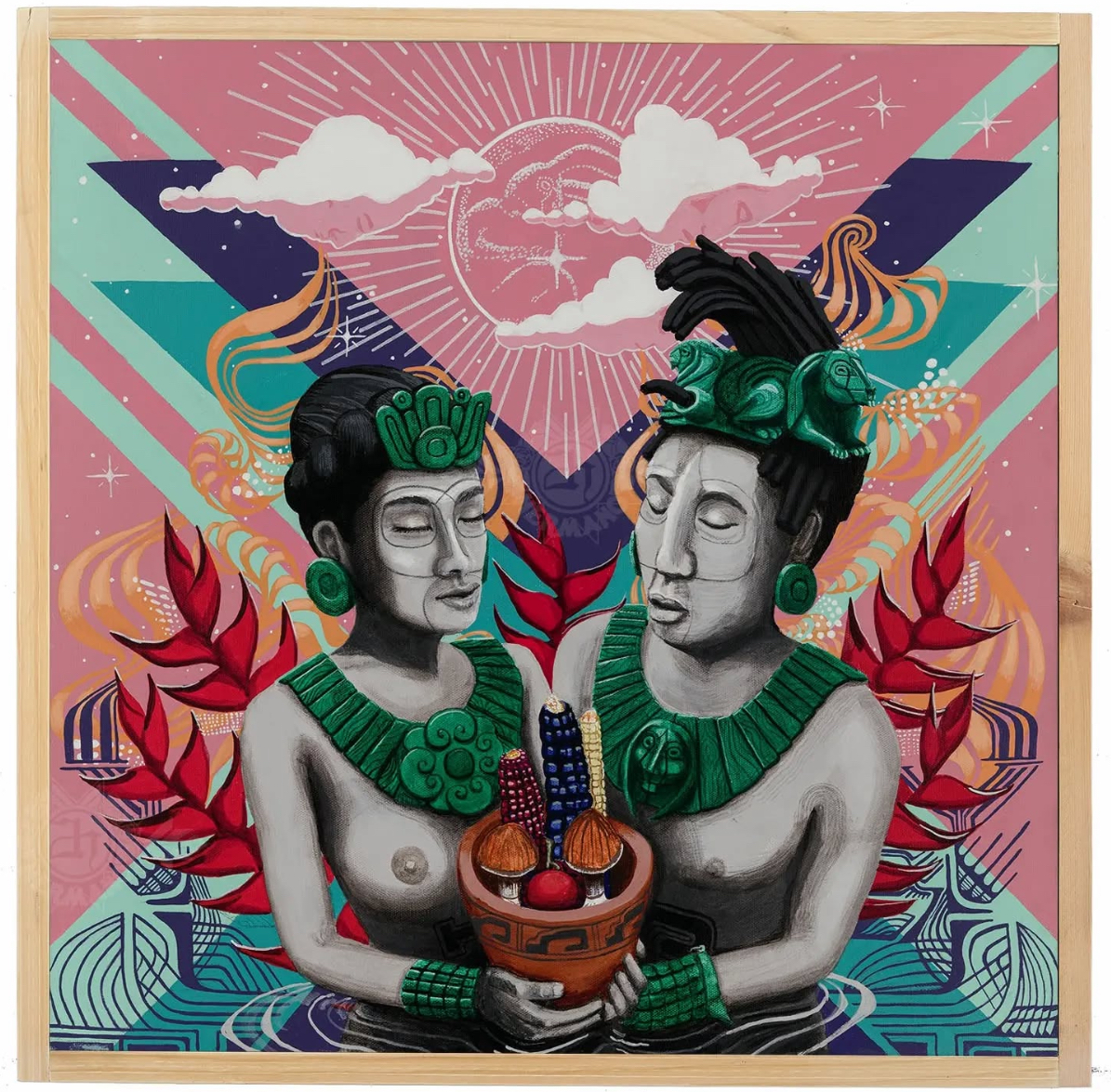
In my latest work, La Cosecha (The Harvest), I explore the intersection of ancestral roots and modern identity. This piece serves as a visual bridge between the earthen past and our contemporary existence
The Spirit of the Harvest
In the world of Neo-Indigenous art, La Cosecha is more than a depiction of agriculture; it is a portrait of reciprocity.
The Weight of Gratitude
The figures in this piece are rendered with a statue-like permanence to reflect a truth that is often lost in our fast-paced modern world: the harvest is not a gift—it is a result. It is the culmination of labor, patience, and a sacred contract with the Earth. By depicting the man and woman with eyes closed, I am capturing the moment of internal prayer—the precise second where we acknowledge that while our hands did the work, the Creator provided the life.
Honoring the Cycle
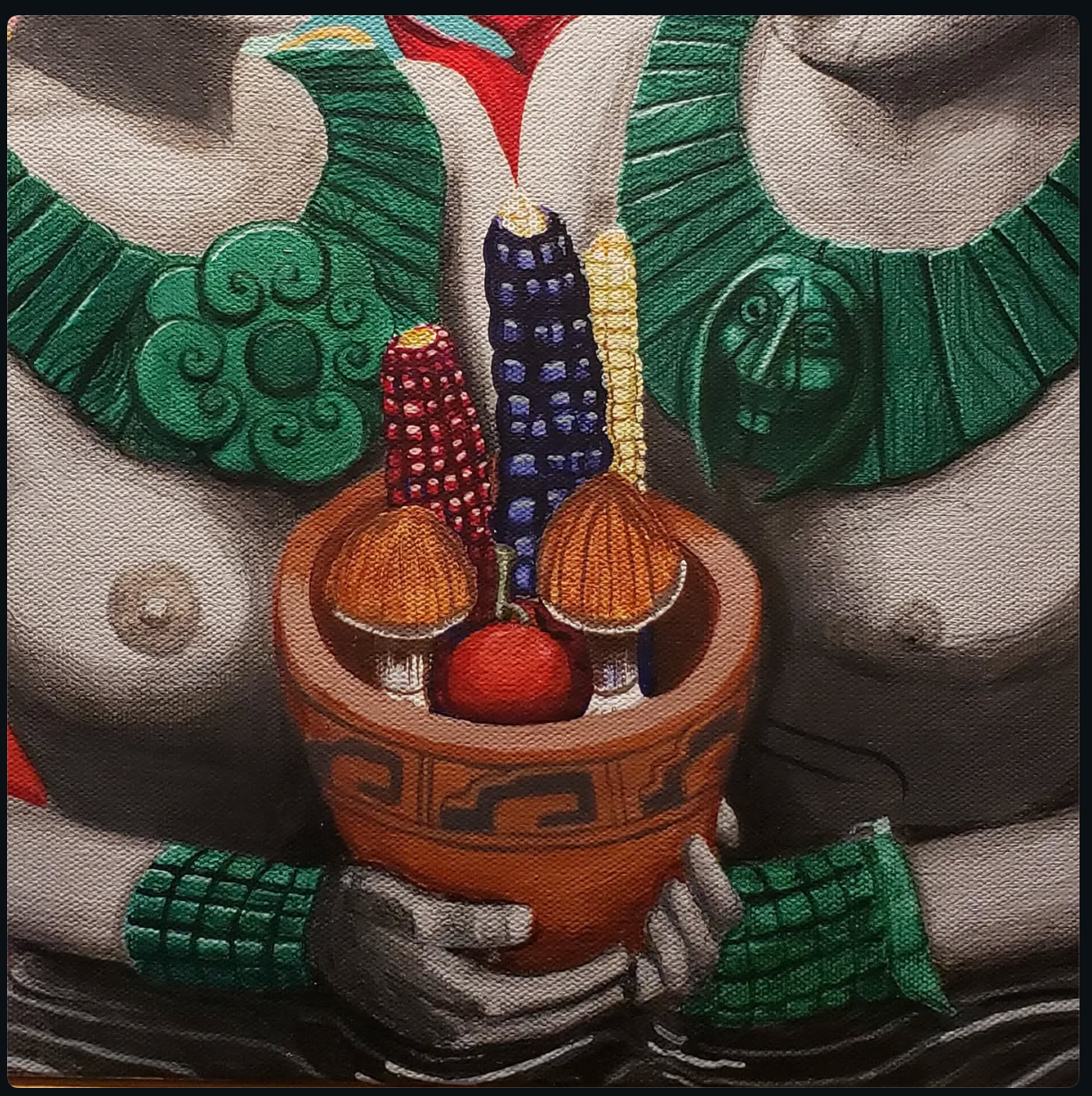
We celebrate this “Cosecha” in the fall, marking the transition from growth to sustenance. But the cycle is not just seasonal; it is ancestral. The earthen ceramic vessel, adorned with patterns passed down through generations, holds the staples of our survival:
• Corn: The backbone of our physical and spiritual history.
• Chili: The fire and flavor of our resilience.
• Mushrooms: The hidden wisdom of the earth.
A Neo-Indigenous Offering
By presenting these gifts, the figures in the painting are not just offering food; they are offering their respect to the cycle of life. As an artist, my work is to ensure that this ancient tradition of giving thanks is not viewed as a relic of the past, but as a living, breathing practice for the future. We are still here, we are still working, and we are still grateful.
My Advisor’s Note: The “Blind Spot” check
You mentioned “hard work” in your prompt. Don’t let that be a throwaway line. In your blog post, you should explicitly mention a specific struggle you had while painting this or a struggle in your own life that mirrors the “hard work” before a harvest. Why? Because vulnerability creates connection, and connection creates followers. People don’t just buy a painting of corn; they buy the story of the person who spent hours rendering that corn as an act of worship.
